
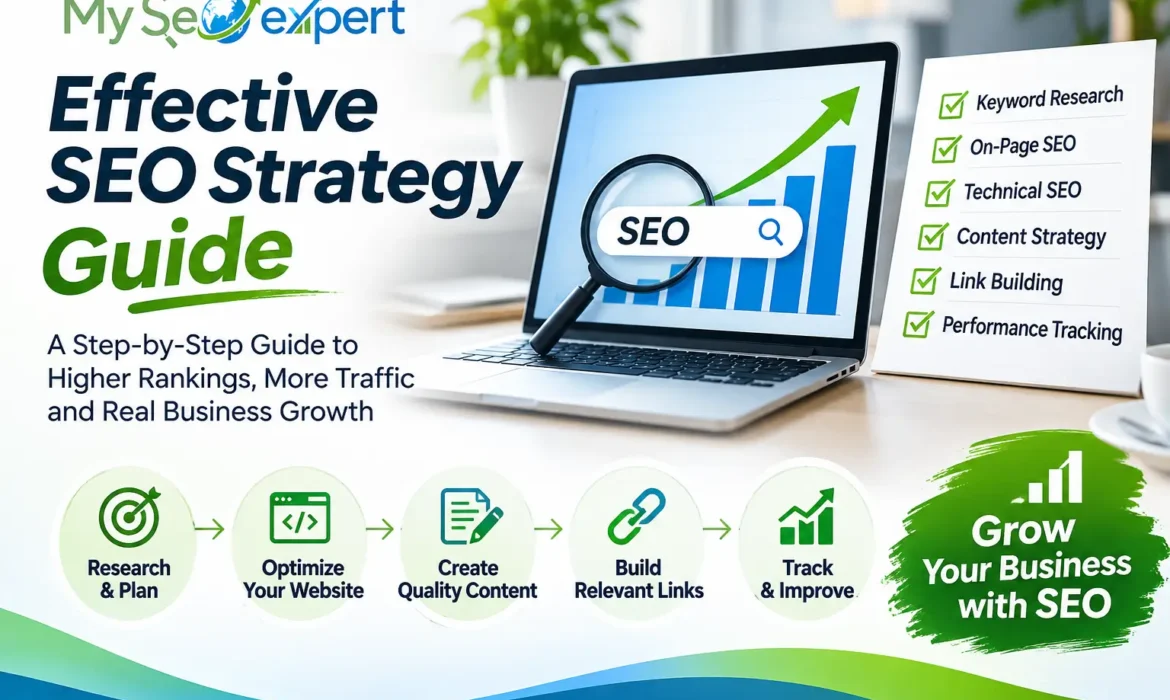
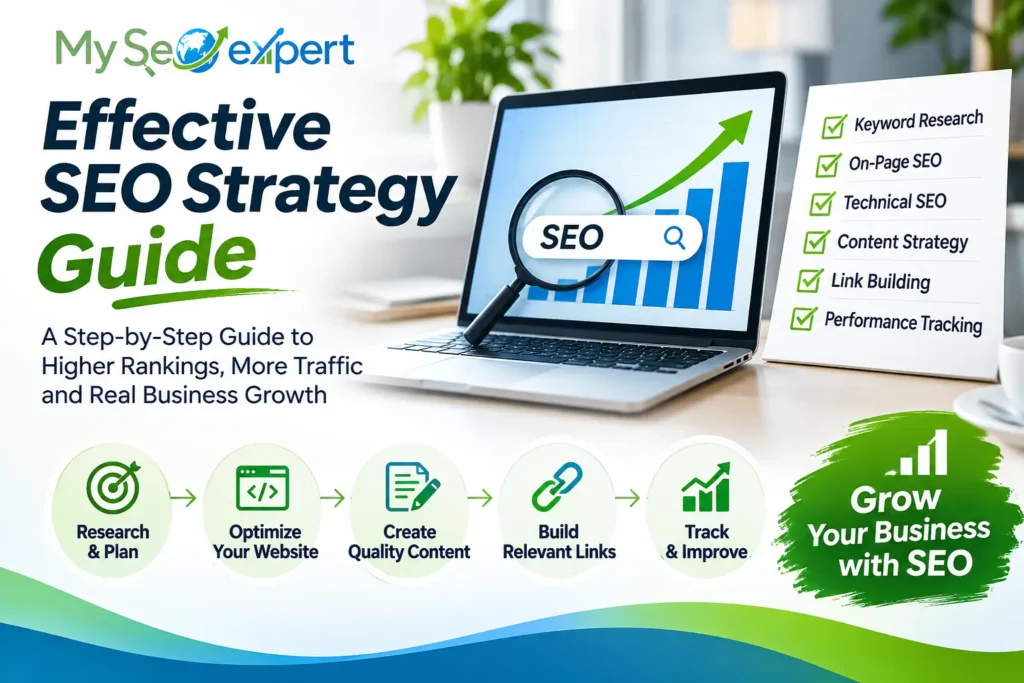
An effective SEO strategy is not a list of random tasks. It is a clear plan that connects what your customers search for with what your website offers, then keeps improving based on results. In this guide, you will learn how to build a robust SEO strategy for your business website, step by step, so you can improve visibility, attract more organic traffic and turn visitors into customers without wasting time on work that does not move the needle.
- Understand your audience and what they search for.
- Do keyword research and pick realistic targets.
- Optimize every important page (on-page SEO).
- Fix the technical health of your website (technical SEO).
- Build authority from other websites (off-page SEO).
- Measure results and keep improving.
Step 1: Understand Your Audience
Before you touch keywords or code, get clear on who you want to reach. Research your ideal customers and write down:
- Who they are: their role, location and the type of business or home they have
- What problems they want to solve
- The questions they ask before they buy
- The words they use, which are often different from industry terms
- What makes them choose one business over another
Talk to your sales team, read customer emails and reviews, and look at the questions people ask on calls. This shapes every step that follows.
Step 2: Keyword Research
Keyword research is the foundation of a successful SEO strategy. Use tools such as Ahrefs or Semrush to find the words your audience uses when they search for your products or services.
| What to check | Why it matters |
|---|---|
| Search volume | Shows how many people search for the term each month |
| Keyword difficulty | Shows how hard it is to rank. For newer websites, terms under about 30 are often a good place to start |
| Search intent | Tells you whether the searcher wants to learn, compare or buy |
| Business value | Shows how likely the searcher is to become a customer |
Aim for a mix of terms with good volume and lower competition, then map each keyword to one page, so your pages do not compete with each other.
Step 3: On-Page Optimization
On-page SEO is what visitors and search engines see on each page. A well-optimized page with a clear layout ranks better and keeps visitors from leaving straight away.
- Meta titles and descriptions: include the target keyword naturally and make people want to click.
- Headings: one clear main heading, with sub-headings that follow the visitor's questions.
- Content: write helpful, persuasive content that answers the search and leads visitors to contact you.
- Images: compress files and add descriptive alt text.
- Navigation: make it easy to find key pages in one or two clicks.
- Internal links: connect related pages so visitors and search engines can follow the topic.
- Outbound links: link to trusted, relevant sources where they add value for readers.
Step 4: Technical SEO
Technical SEO makes sure search engines can crawl and index your website and that visitors get a fast, smooth experience.
| Area | What to fix or improve |
|---|---|
| Speed and loading time | Compress images, use caching and remove heavy scripts |
| Site architecture and URLs | Logical structure with short, descriptive URLs |
| Schema markup | Structured data that helps Google understand your business, services and FAQs |
| Crawl errors and broken links | Fix 404 errors and redirect chains |
| Duplicate content | Merge or differentiate pages that cover the same topic |
| Mobile experience | Pages that work smoothly on every phone |
If your website is slow or built on an outdated theme, a rebuild may be the fastest fix. See our WordPress development service.
Step 5: Off-Page Optimization
Off-page SEO builds your website's authority through signals from other websites and platforms:
- Quality backlinks: earn links from respected websites in your industry.
- Social media: engage your audience on platforms such as Facebook, Instagram, X and LinkedIn. Our social media management service can help.
- Communities: take part in forums and discussion sites where your customers ask questions.
- Reputation: monitor brand mentions and reviews, and respond to feedback professionally.
Step 6: Measure and Keep Improving
No SEO strategy is complete without measurement. Track these metrics in Google Search Console and Google Analytics:
| Metric | What it tells you |
|---|---|
| Keyword rankings | Where your pages appear for your target searches |
| Impressions and clicks | How often you appear in results and how often people click |
| Organic traffic | How many visitors arrive from search |
| Engagement | How long visitors stay and how many pages they view |
| Conversions | How many visitors call, fill a form or buy |
Review results every month, double down on what works and fix what does not. Search engines update their algorithms often, so your strategy should keep evolving too.
Choosing the Right Type of SEO
- SEO: for businesses that sell across a country or online.
- Local SEO: for businesses that serve customers in specific cities and areas.
- AI SEO, GEO and AEO: for appearing in AI answers such as Google's AI Overviews and ChatGPT.
When to Get Professional Help
SEO takes time, skill and consistent effort. If you would rather focus on running your business, a specialist can build and run your strategy, beat your competitors in search and help you see a return on your investment sooner. My SEO Expert creates SEO strategies built around your business goals, and you can start with a free SEO audit report in just 24 hours.
Frequently Asked Questions
What is an SEO strategy?
An SEO strategy is a plan to improve your website's rankings on search engines. It covers audience research, keywords, on-page and technical improvements, authority building and regular measurement.
What are the main steps of an SEO strategy?
Understand your audience, research keywords, optimize your pages, fix technical issues, build authority off-page, and measure and improve your results.
How do I choose the right keywords?
Look for keywords your customers actually use, with good search volume, manageable difficulty and clear buying or research intent. Map each keyword to one page.
How long does an SEO strategy take to work?
Most websites see first gains in 3 to 4 months and steady growth by month 6. Results keep building as you add content and authority.
Which tools do I need for SEO?
Google Search Console and Google Analytics are essential and free. Tools such as Ahrefs or Semrush help with keyword research, competitor analysis and backlinks.
How often should I update my SEO strategy?
Review your results every month and adjust your plan every quarter, or sooner after a major Google update or a change in your business.
Get a Free SEO Audit Report in 24 Hours
Find out where your website stands and what to fix first. We will review your keywords, pages, technical health and authority, and send you a clear action plan.